Track Maintenance with Ease
Rather than sending work orders into a black box, easily view maintenance tasks and job status on an all-encompassing board.
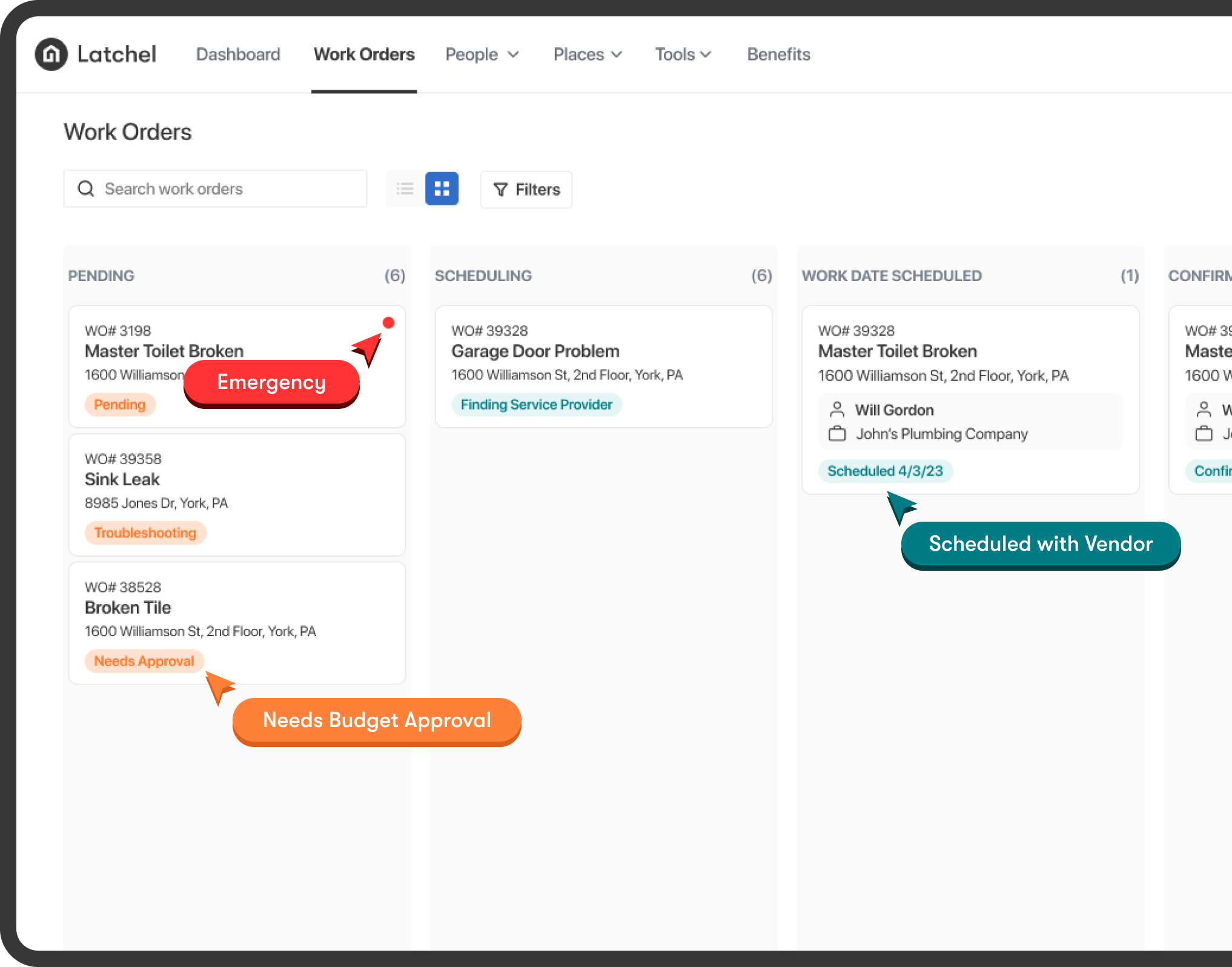
Confidently Manage Property Maintenance
Having visibility into your maintenance status from one place gives you the power to control the outcomes.
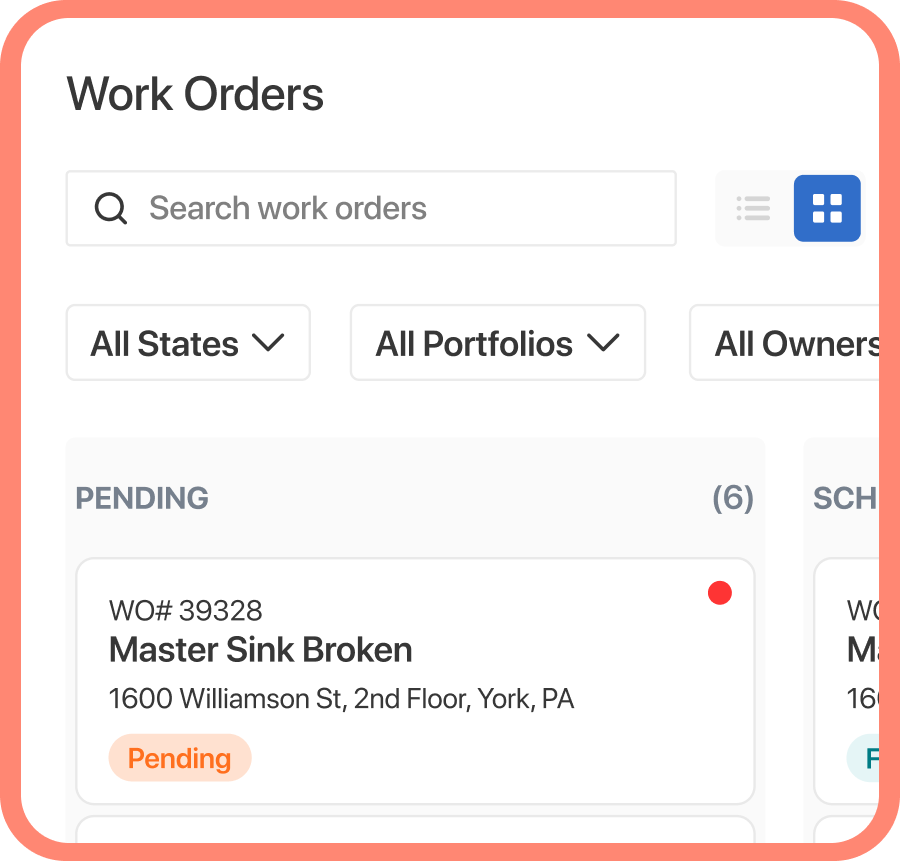
See What Matters
Easily set up work order filters based on age, type, portfolio, severity, or more to work on what’s most important.
Learn More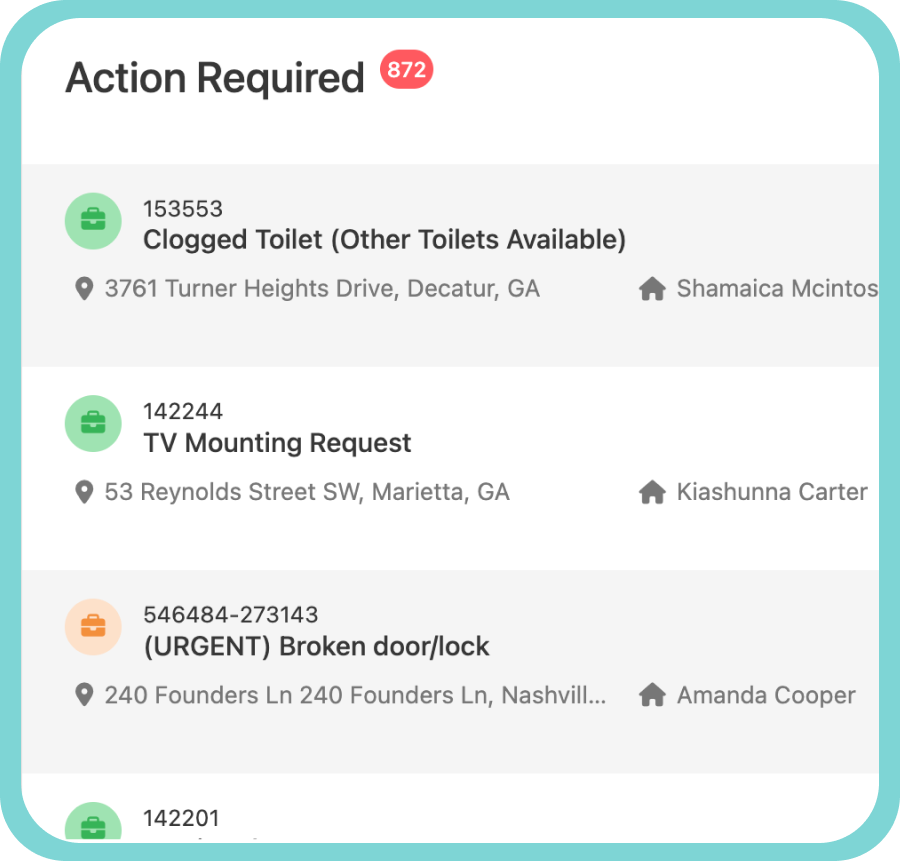
Automate Alerts and Tasks
Get automated alerts that matter most so that you can deliver the best experience to your resident and owners.
Learn More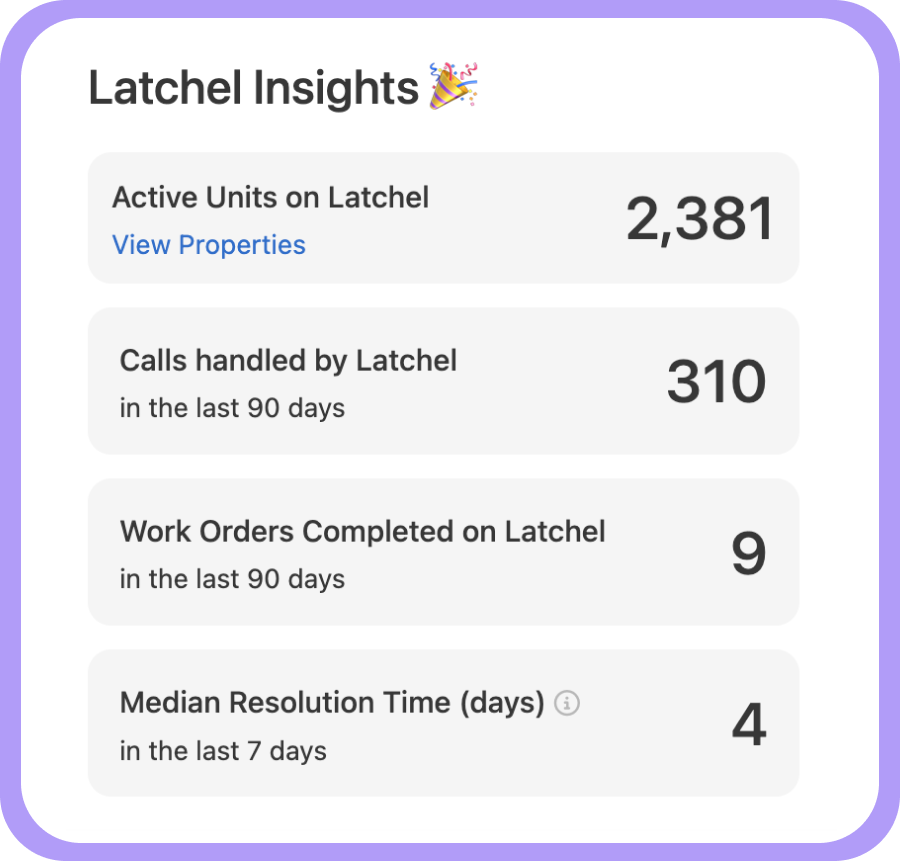
Quick Insights
View high-level maintenance health and have the confidence to know that Latchel’s maintenance call center has you covered.
Learn MoreCustomize Your Maintenance Alerts
By customizing your alerts, you get to focus on the problems that actually matter to you. Prioritize scheduling delays, hide invoice alerts, you get to decide what to focus on.
Get a Demo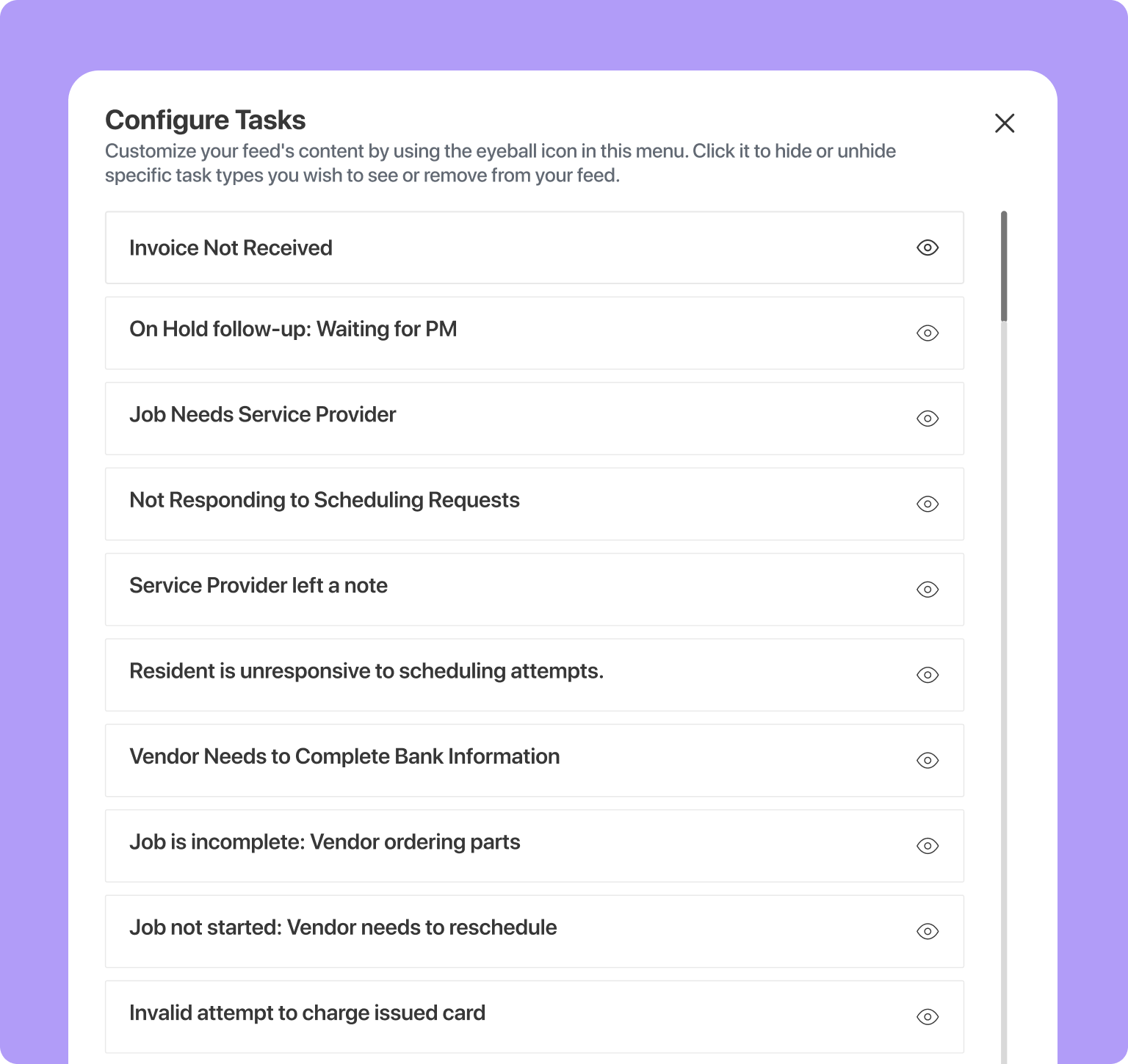
Ironclad Legal Protection
Every interaction, including calls and video chats get logged to the work order so that you have ironclad legal protection and have the visibility you need.
Get a Demo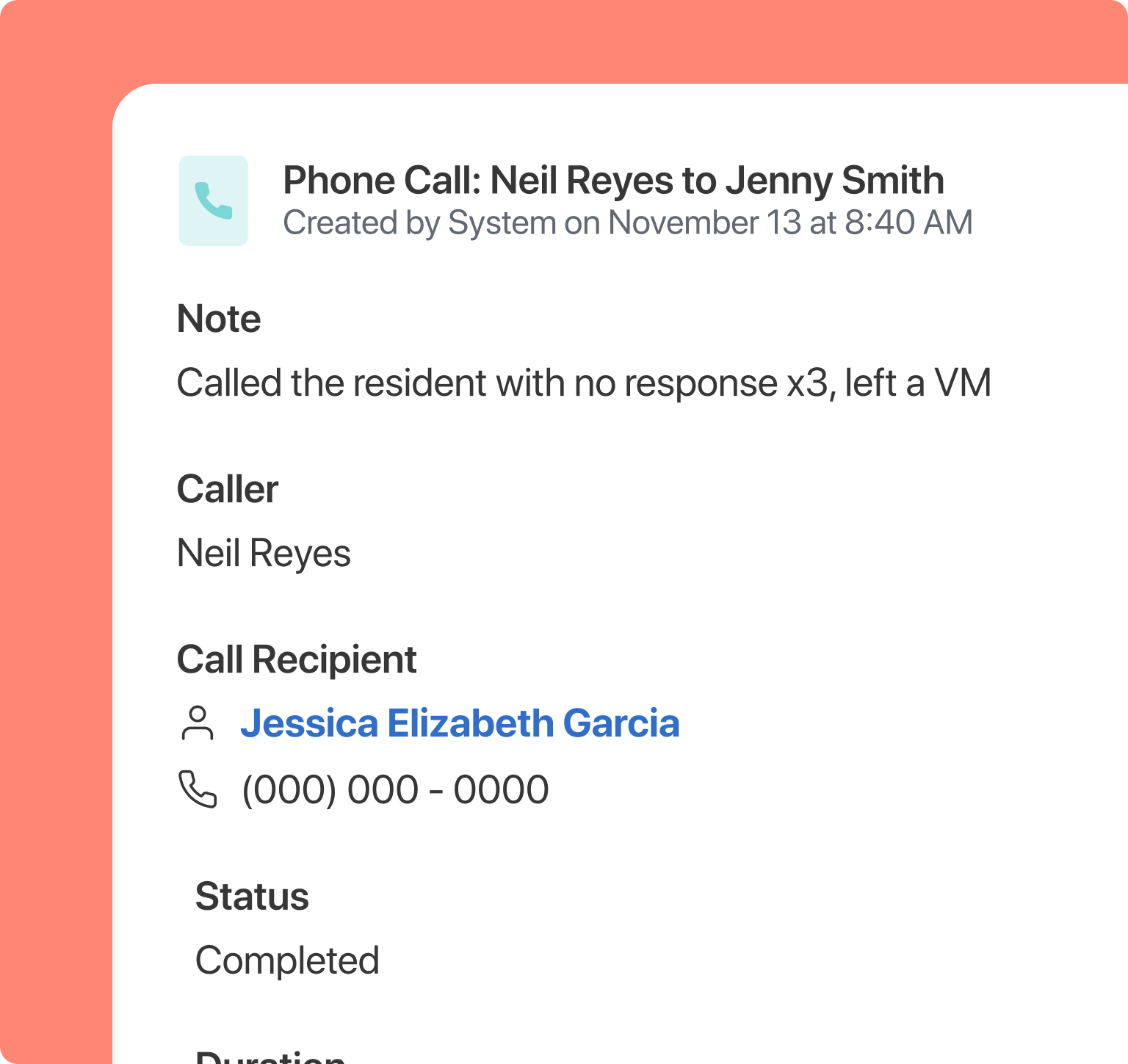
Quickly Find Work Orders
Easily search for a work order from any screen by typing in the repair problem, work order number, property address, resident name, or anything you can think of.
Get a Demo
Access to Message Transcripts
All phone and SMS transcripts are stored on the work order so you’re never in the dark on who said what to who. View it all right from the work order.
Get a Demo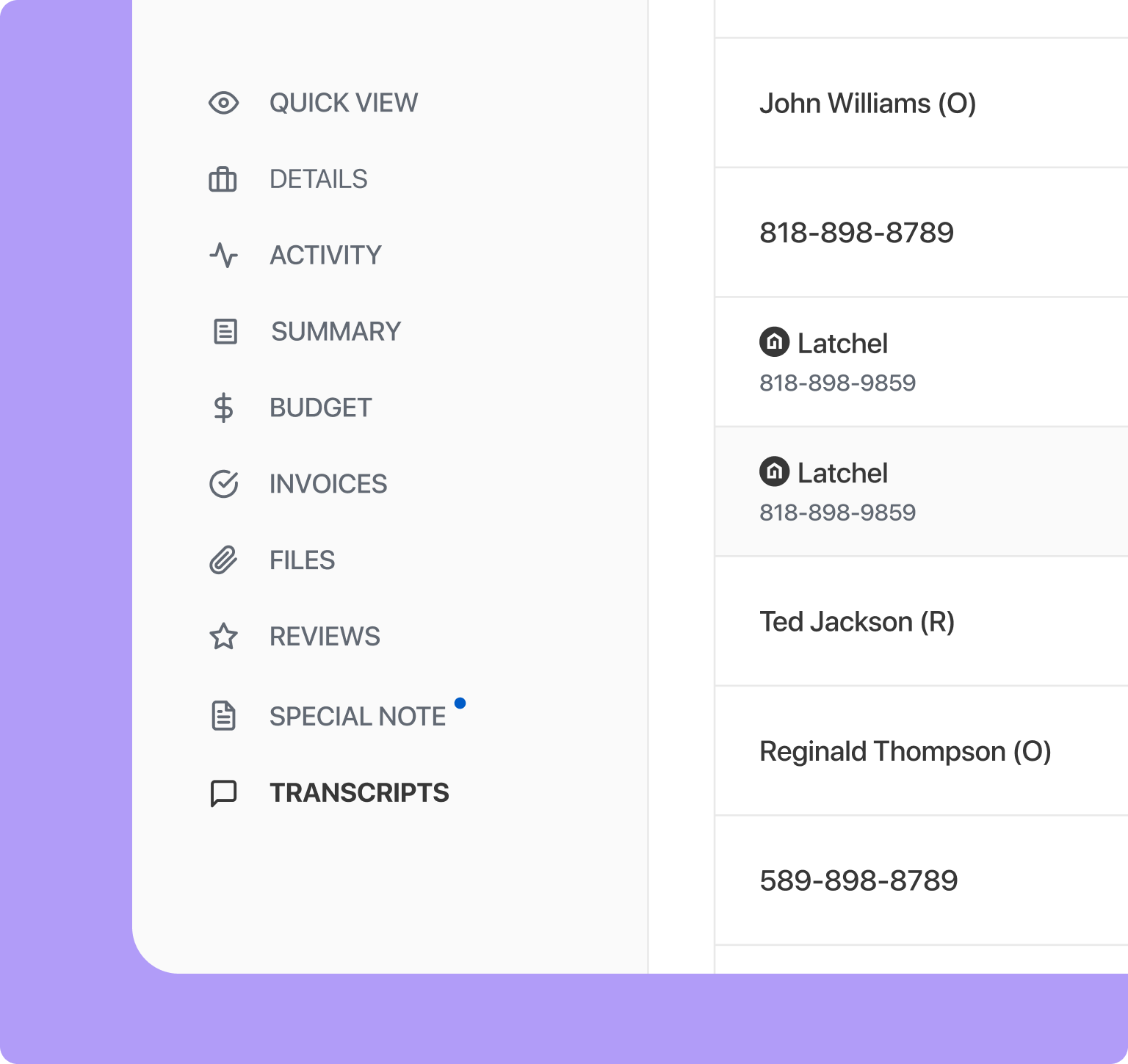
FAQ: Work Order Tracking
How can property managers view all maintenance work orders in one place?
Managers use a centralized maintenance dashboard within their property management software that aggregates every open, pending, and completed request into a single searchable list, often filterable by property, priority, or status.
Latchel's Full Lifecycle Software provides a centralized platform for viewing all maintenance work orders. The system integrates with major property management systems including Yardi, Appfolio, Buildium, Rent Manager, Rentvine, Propertyware, PropUp, and Leonardo247, allowing data to automatically sync between platforms. This integration ensures that all work orders—whether created through AI troubleshooting, human experts, or manual entry—are visible in one unified system. Property managers can track work orders from initial intake through scheduling, dispatch, completion, and invoice collection without switching between multiple tools.
Can work order notifications be customized for property managers?
Yes. Most platforms allow managers to set custom triggers, such as receiving an instant SMS for "Emergency" tags while getting a daily email digest for "Standard" or "Low" priority tasks to avoid notification fatigue.
Latchel's platform is built around customization. Property managers can define custom rules and configure the system to match their specific preferences. The AI platform is designed for you to make it your own—you don't need to know any code, as the backend settings are "dead simple to go in and tweak everything to fit your needs." You can write rules in everyday English just like asking an employee to adjust their workflow. This customization extends to how notifications and escalations are handled, allowing property managers to set up alerts based on their unique requirements and communication preferences.
How often should work order data be updated for property managers?
Data should be updated in real-time. As soon as a technician taps "Start Job" or "Complete" on their mobile app, the central dashboard should reflect that change immediately so office staff can provide accurate updates to residents or owners.
Latchel's platform provides real-time data updates throughout the maintenance lifecycle. The system automatically captures information at every stage—from initial AI-guided troubleshooting (including photos, videos, and transcripts) through vendor dispatch, completion, and invoice collection. Custom AI integration syncs with your PMS to keep data current across platforms. With 24/7 human experts available and automated workflows running continuously, work order data is updated as events happen rather than in batches, ensuring property managers always have access to the most current information.
Can property managers compare maintenance performance across multiple properties?
Yes. By using portfolio-wide reporting tools, managers can compare metrics like "Average Days to Completion" or "Repair Costs per Unit" between different buildings to identify which properties are underperforming or have aging infrastructure.
Latchel's platform supports managing multiple properties with different requirements while providing consistent data collection. The system tracks key metrics across all properties, including resolution rates (23% of tickets solved at intake), emergency de-escalation rates (48% of critical issues de-escalated), and resident satisfaction (4.8 out of 5 stars average). Property-specific rules allow you to configure different protocols for each property while still collecting comparable data. The centralized Full Lifecycle Software and PMS integrations mean all property data flows into one system, enabling property managers to compare performance across their entire portfolio.
How can I track the maintenance history?
Every work order should be automatically logged in a digital asset history. You can search by unit number or specific appliance (e.g., "Water Heater") to see every past repair, the date it occurred, the cost, and which vendor performed the work.
Latchel captures comprehensive maintenance history through its documentation features. For every maintenance request, the system collects and stores photos, videos, and full troubleshooting transcripts. Technicians can access this complete history before arriving on site, seeing exactly what the problem is, what has already been tried, and what was resolved. The Full Lifecycle Software tracks each work order from intake through completion and invoice collection, creating a permanent record. This documentation helps eliminate repeat visits by ensuring all historical information is available for future reference on recurring issues.
How do property managers track who performed actions on work orders?
Systems maintain an automated audit trail. This log records every action taken—from who created the ticket to who assigned the vendor and who approved the final invoice—complete with names and precise timestamps.
Latchel's platform creates detailed records throughout the maintenance process. The system captures full troubleshooting transcripts documenting the AI and human expert interactions with residents. When technicians are dispatched, the dispatch rules and on-call calendars track which vendors or in-house technicians were assigned. The workflow builders in the Full Lifecycle Software log actions taken at each stage—from scheduling and dispatch to follow-up communication and invoice collection. This audit trail provides visibility into who performed what actions and when throughout the work order lifecycle.
How should property managers organize maintenance photos and videos?
Media should be attached directly to the digital work order. Technicians upload "before and after" files via their mobile app, which the software then automatically tags and stores with that specific repair record for easy retrieval during disputes or owner reports.
Latchel automatically organizes maintenance photos and videos by associating them with specific work orders. During AI-guided troubleshooting, residents are walked through diagnostic steps that include collecting photos and videos of the issue. This media is attached to the work order and accessible to technicians, who can see photos, videos, and full troubleshooting transcripts before arriving on site. This organization ensures all visual documentation is linked to the relevant maintenance request, easily searchable, and available for future reference, whether for repair history, vendor performance review, or damage assessment through the Chargeback Protection Program.
How can property managers collaborate on maintenance work orders?
Collaboration happens through internal notes and @mentions within the work order. This allows managers, coordinators, and onsite staff to chat about a specific repair in a thread that stays attached to the record, keeping all communication in context.
Latchel facilitates collaboration through its multi-layered approach to maintenance handling. The platform creates a funnel where AI handles initial troubleshooting, human experts step in when needed, and property managers can "take the reins on the third layer of the funnel if the issue is super complex or requires escalation." All parties have access to the same information—photos, videos, troubleshooting transcripts, and work order details. The Full Lifecycle Software automates follow-up communication with residents and coordinates with vendors, keeping everyone informed. This shared visibility and automated communication enables seamless collaboration without requiring manual handoffs or status meetings.
How do property managers use maintenance data for budgeting?
Managers analyze historical spend categories to predict future costs. For example, if data shows HVAC repairs spike every June, they can proactively budget for preventative maintenance in May or plan for full system replacements in the next fiscal year.
Latchel's platform provides data that supports maintenance budgeting in several ways. The system tracks resolution rates (23% of tickets solved without dispatch, 48% of emergencies de-escalated), which directly impacts labor and vendor costs. Invoice collection is automated through the Full Lifecycle Software, providing accurate cost data for each work order. The Chargeback Program helps identify resident-caused damages and collect chargebacks, turning maintenance from a cost center into potential revenue. Property managers can analyze maintenance patterns across their portfolio to forecast future costs and allocate budgets more accurately based on historical data.
How do property managers track work orders for in-house vs external vendors?
They use vendor tagging and labor-type filters. This allows the system to route "in-house" tasks to an internal staff calendar with hourly payroll tracking, while "external" tasks are sent to third-party contractors with associated 1099 tax tracking and insurance verification.
Latchel allows property managers to build dispatch rules prioritizing both preferred vendors and/or in-house technicians. Smart on-call calendars and simple escalation rules can be configured to route work orders appropriately based on your preferences, whether that means sending certain types of issues to in-house staff and others to external vendors. The Full Lifecycle Software tracks scheduling, dispatch, and invoice collection regardless of who performs the work. This unified tracking provides visibility into work order volume and performance for both in-house technicians and external vendors, enabling property managers to optimize their maintenance workforce allocation.
What vendor performance metrics should property managers monitor?
Managers should monitor Response Time (time to accept), Fulfillment Time (time to complete), Callback Rate (quality of fix), and Budget Adherence (actual invoice vs. original estimate).
Response time is critical, Latchel's human experts are available in 15 seconds as a benchmark for fast response. First-time fix rate matters because the platform aims to eliminate repeat visits by giving technicians all information up front. Resolution effectiveness can be measured against Latchel's benchmarks of 23% tickets resolved at intake and 48% emergencies de-escalated. Resident satisfaction is tracked through reviews, property managers using Latchel average 4.8 out of 5 stars. Cost efficiency can be monitored through automated invoice collection. These metrics help property managers identify top performers and address underperforming vendors.
Related capabilities
Dispatch & Scheduling
Your preferred techs, scheduled in about 15 minutes, on rules you set once.
Learn MoreMaintenance Automation
Workflows that keep coordinating work orders on the days your team is out.
Learn MoreReporting and Analytics
High level metrics and granular KPIs, from dashboards to your own queries.
Learn MoreAutopilot AI
The whole maintenance lifecycle on one platform, from the first message to the final invoice.
Property management maintenance software